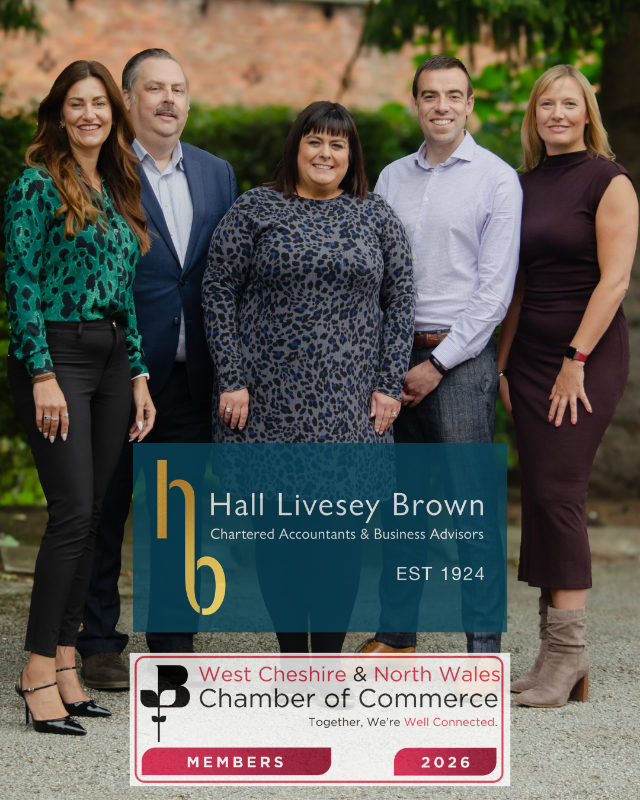
We are pleased to share that Hall Livesey Brown is now a member of the West Cheshire & North Wales Chamber of Commerce.
We have been based in Tarporley for over 100 years, and we are still an independently owned firm – not part of a national chain. That matters to us. It means clients get to work closely with a dedicated partner, backed by a team who take the time to properly understand their business, rather than being passed around a call centre.
Joining the Chamber is part of our ongoing commitment to supporting local, independent businesses across the region. It is a chance to build stronger connections, meet new people, and get even more involved in the West Cheshire and North Wales business community.
We are looking forward to meeting fellow members at upcoming events and getting to know more of the businesses that make this region such a great place to work.
If you would like to find out more about how we can support your business, get in touch with our team.
When you set up a limited company in the UK, one of the legal requirements is to have a registered office address. But what exactly is a registered office, and why might you choose to use the address of Hall Livesey Brown rather than your own?
Let’s break it down.
What Is a Registered Office?
A registered office is the official address of your company. It’s where all important legal documents, letters from HMRC and Companies House, and other formal communications are sent. This address appears on the public register, so anyone can look it up.
It’s not the same as your trading address (where you do business). In fact, you don’t even have to work from the registered office — but you do need to have one, and it must be a physical address in the same part of the UK as your company is registered (England and Wales, Scotland, or Northern Ireland).
In addition to a physical address the company must also provide an email address and read any emails that your company receives.
Why Not Use Your Own Address?
Many new businesses consider using their home or business premises as their registered office, but there are a few reasons why that might not be ideal:
Privacy: Since the registered office is public, anyone can see it — including your home address, if that’s what you use.
Professional Image: An accountant’s address may appear more credible and established, especially if your business is just getting started.
Security: Keeping your personal or trading address private can help prevent unsolicited mail or visits.
Compliance: Official post must be received and acted upon promptly. If you’re away or miss something important, it can lead to penalties.
Why Use Hall Livesey Brown’s Address?
At Hall Livesey Brown, we offer our clients the option to use our address as their registered office. This is at a nominal cost of £10+VAT per month. Here is why that might be a smart move:
We will Handle Your Statutory Post: We’ll receive all your official mail from HMRC and Companies House — and we’ll make sure you see the important stuff quickly.
Stay Compliant: You won’t miss a filing deadline or overlook an important notice. We know what to look out for.
Keep Your Details Private: Using our address keeps your personal or business location off the public register.
Enhance Your Image: Our professional office address may help build trust with customers, suppliers, and other stakeholders.
Provision of email address for your company: We will provide and monitor the email address notified to Companies House and make you aware of any actions required.
It’s a Simple Step That Makes a Big Difference
Setting up your registered office at Hall Livesey Brown is straightforward for all of our clients, and it comes with the peace of mind that professionals are helping keep your company on track.
Hall Livesey Brown, Chartered Accountants in Tarporley, Cheshire has been named as one of the nation’s 100 most impressive small firms by the Small Business Saturday UK campaign, as it kicks off a wider call to encourage public support for small businesses.
Hall Livesey Brown, a firm of Chartered Accountants, who support independent business throughout the region, was founded 100 years ago this year by accountant Lenoard Hall. The firm has been based from its main office in the village of Tarporley since 1968 and supports clients throughout the county and further afield.
Following a nationwide search, the Cheshire firm has been selected as part of this year’s SmallBiz100 line-up, which showcases 100 of the most impressive independent businesses from across the nation as part of the count-down to Small Business Saturday on 7 December.
Running in the UK for over a decade, Small Business Saturday is the UK’s most successful small business campaign, which takes place each year on the first weekend in December, celebrating small businesses and encouraging consumers to ‘shop local’ and to support businesses in their communities.
‘In the centenary year of Hall Livesey Brown, I am so pleased that Hall Livesey Brown and the work of the team has been recognised as one of the SmallBiz100 for this year’ said Anne Wilkes, Partner.
Hall Livesey Brown will be profiled by the campaign on 25 October 2024 as part of the 100-day countdown to Small Business Saturday UK.
‘To be able to celebrate Hall Livesey Brown being 100 years old and being recognised as a SmallBiz100 firm at the same time is so exciting. I am looking forward to leading HLB into the next 100 years!’ said Nicola Carter, Partner.
“It’s great to celebrate Hall Livesey Brown as part of this year’s campaign,” said Michelle Ovens CBE, Director of Small Business Saturday UK.
“This year’s SmallBiz100 list shows the huge contribution small businesses make to their communities and the wider UK economy. Despite the economy turning a corner, the nation’s small businesses continue to feel the fallout of a challenging few years and still need significant support to get back on their feet. Small Business Saturday is all about getting the nation to come out in force and show its love for our local businesses.”
With a mission to support and celebrate the UK’s 5.5 million small businesses, Small Business Saturday is a grassroots, non-commercial campaign. It was originally founded by American Express in the U.S. in 2010, and the brand remains the principal supporter of the campaign in the UK.
On Small Business Saturday, customers across the UK go out and support all types of small businesses, from independent shops and restaurants to small service and b2b businesses like accountants and plumbers. Many small businesses take an active role in promoting the day by hosting events and offering promotions.
Since the UK campaign started in 2013, it has reached millions of people and seen billions spent with small businesses on the day itself, with impact that lasts all year round.
Last year, the campaign received support from the Prime Minister, the Mayor of London, as well as the Chancellor of the Exchequer. Over 90% of local councils also supported the campaign, which trended across social media on the day.
Hall Livesey Brown are excited to announce that we have teamed up with Starling Bank to provide our clients with an efficient and effective solution to their business banking requirements.